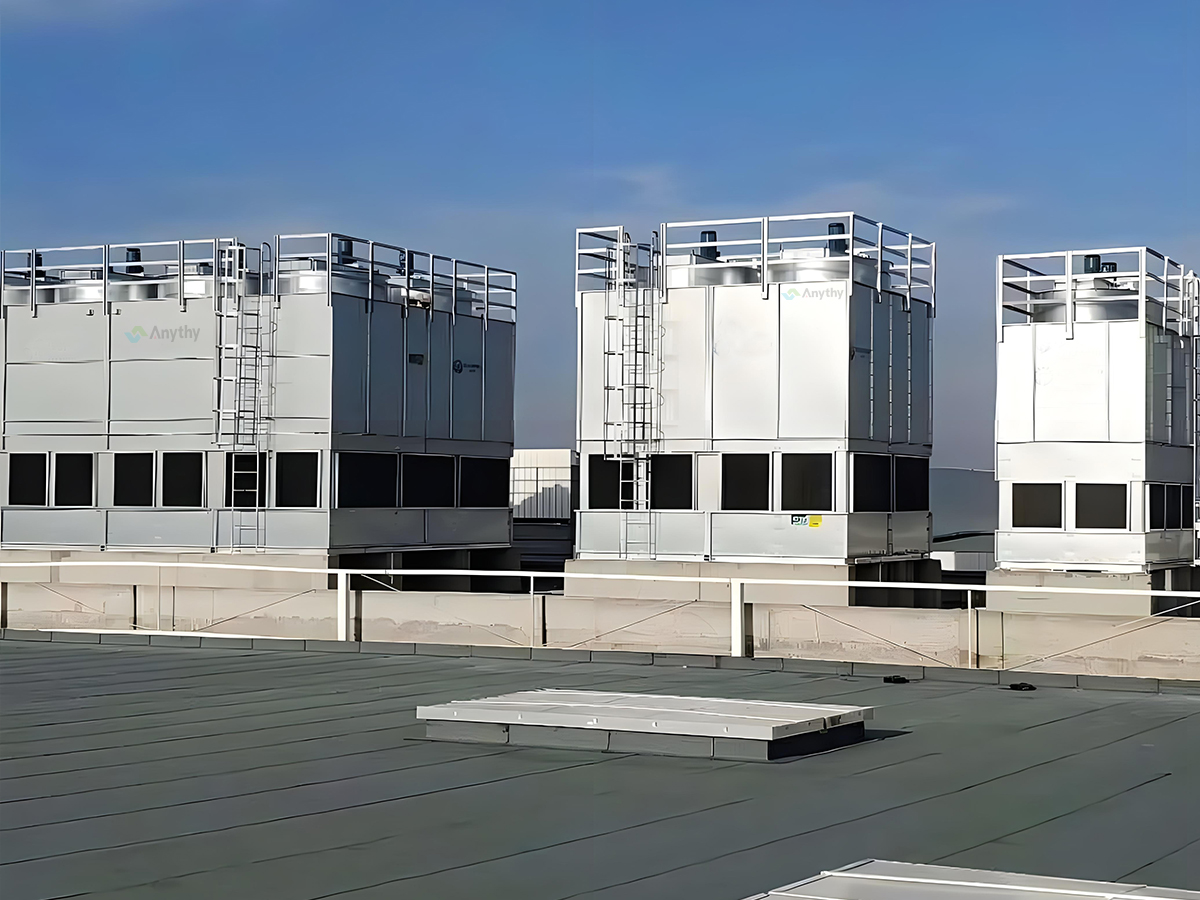
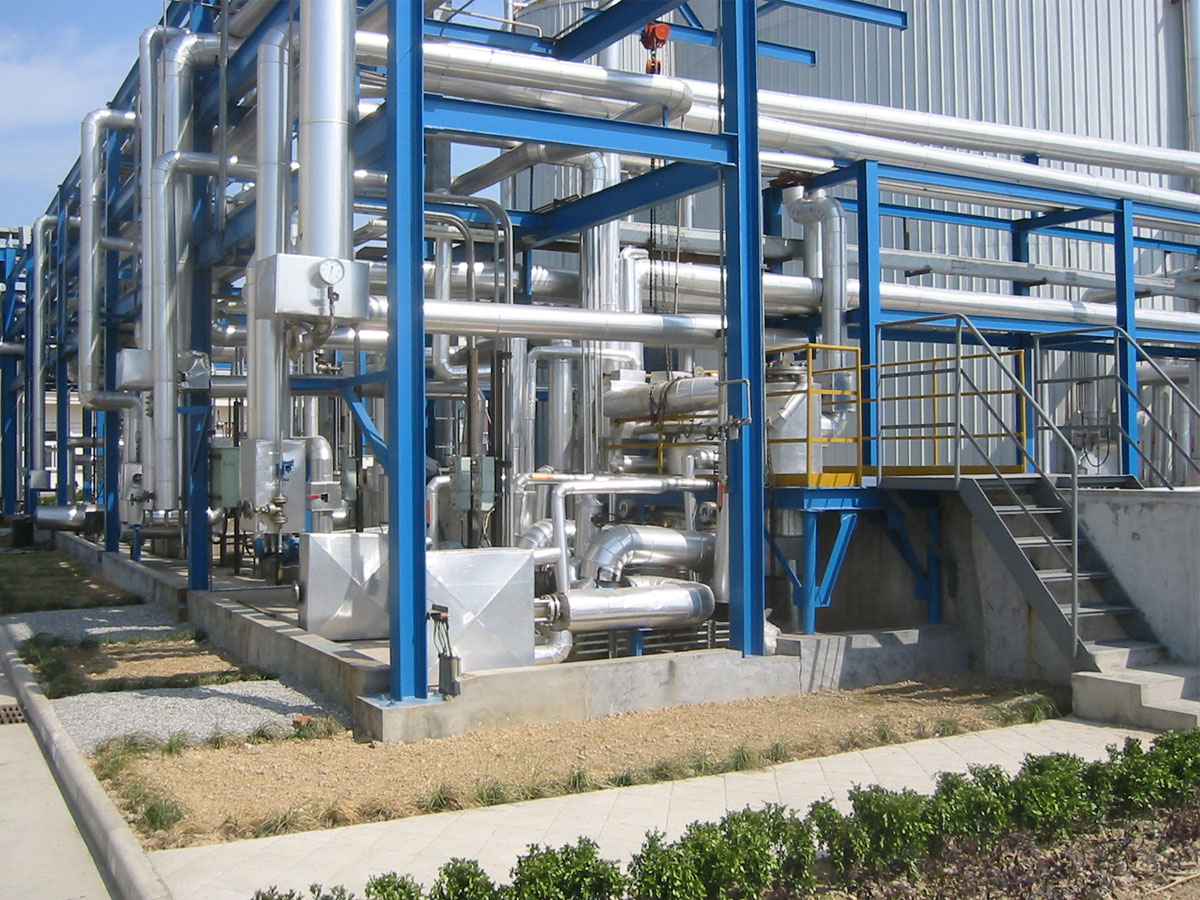
I. Equipment Definition
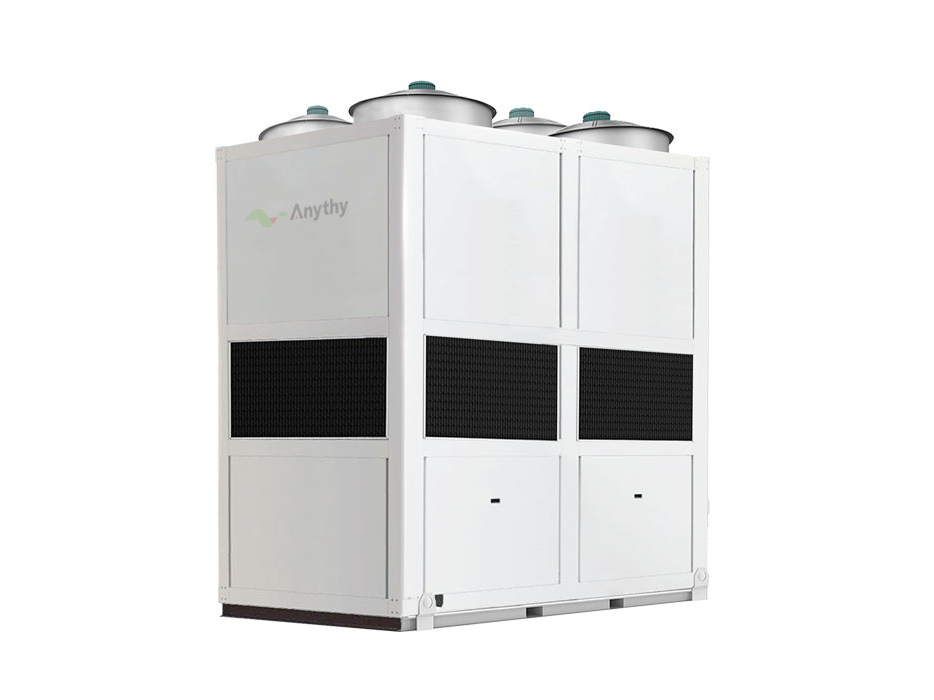
An evaporative‑cooled scroll chiller consists of a scroll‑compressor refrigeration system plus an integrated evaporative condenser. It is an integrated chilled‑water main unit that combines the functions of “chiller main unit + cooling tower + cooling spray pump” into one single piece of equipment. No additional separate cooling tower, cooling‑water pump or cooling‑water piping network is required.
Common refrigerants are R410A and R134a. Modular multi‑scroll‑compressor design is the mainstream solution. Single‑unit cooling capacity generally ranges from 80 kW to 650 kW. Capacity expansion can be achieved by parallel‑connecting multiple modules. It is widely used as cooling source for small‑and‑medium‑sized commercial and industrial applications.
Simple distinction among three types of chillers:
Air‑cooled scroll chiller: Pure sensible‑heat dissipation by air, performance depends on dry‑bulb temperature.
Conventional water‑cooled scroll chiller: Main unit paired with external cooling tower with two‑stage heat exchange.
Evaporative‑cooled scroll chiller: Direct heat dissipation via evaporative condenser, leveraging wet‑bulb temperature.
II. Working Principle
1)Refrigerant Vapor‑Compression Refrigeration Cycle
Scroll compressor: Draws low‑temperature low‑pressure refrigerant vapor and compresses it into high‑temperature high‑pressure gaseous refrigerant.
Evaporative condenser (core differentiating component): The spray pump evenly sprays water from the water tank onto the outer surface of refrigerant coils to form a water film. Axial‑flow fans force air to pass transversely through the coils. The water film absorbs heat by evaporation (latent‑heat transfer) and directly removes heat from refrigerant inside the coils. High‑temperature refrigerant condenses into high‑pressure liquid.
2) Key advantage:
Its heat‑transfer limit approaches outdoor wet‑bulb temperature, so condensing temperature is substantially lower than that of air‑cooled units.
Electronic expansion valve: Throttles high‑pressure liquid refrigerant for pressure reduction, turning it into low‑temperature low‑pressure gas‑liquid two‑phase mixture.
Evaporator (shell‑and‑tube / plate type): Refrigerant absorbs heat from chilled water and cools it down for supply to air‑conditioning terminals or industrial equipment. After heat absorption, refrigerant vaporizes and returns to the compressor for continuous circulation.
Brief schematic logic:Chilled‑water circulation (cooling supply to external loads) | Refrigerant circulation (internal refrigeration) | Spray‑water circulation (unit self‑heat dissipation)
III. Core Structural Composition
Scroll compressor (multi‑unit parallel modular configuration)Hermetic scroll compressor with low vibration and low noise. Failure of one compressor will not affect operation of others. Flexible load regulation makes it suitable for part‑load conditions. Fixed‑frequency / variable‑frequency scroll or digital‑scroll types are optional.
Evaporative condenser (coils + spray system + water eliminator + axial‑flow fan + bottom water‑collecting tank)Coils are mostly made of galvanized steel or stainless steel. Water baffles and water eliminators are fitted to reduce water drift loss. Built‑in interfaces for automatic water make‑up, overflow and blow‑down are available.
Evaporator: Shell‑and‑tube / plate heat exchanger, producing chilled water at 5‑12 ℃.
Throttling device: Electronic expansion valve for precise refrigerant flow regulation, delivering temperature‑control accuracy up to ±0.5 ℃.
Built‑in spray circulation pump (no external cooling pump required).
Intelligent electric control system: Independent circuit control; multiple protections including high/low‑pressure, anti‑freezing, water‑flow, overload and water‑shortage protection. Remote monitoring and multi‑module linkage are supported.
IV. Main Advantages
Remarkable energy‑saving performance: Its condensing temperature is 8‑15 ℃ lower than air‑cooled units, which greatly cuts compressor power consumption. Under identical operating conditions, it saves 25%‑40% power compared with air‑cooled scroll chillers. Compared with conventional water‑cooled systems, it eliminates extra energy consumption of cooling‑water pumps and cooling‑tower fans, resulting in lower overall system energy consumption.
Integrated design for easy installation: Fully factory‑assembled unit. Only chilled‑water inlet/outlet piping and power supply connections are needed. No separate cooling‑tower equipment‑room design or large‑scale cooling‑water piping work is required. Suitable for open‑air installation on rooftops or open ground.
Superior water‑saving performance over conventional water‑cooled systems: Water consumption is only 1/4‑1/5 of conventional open‑tower water‑cooled systems, ideal for water‑scarce regions.
High operational reliability and good fault tolerance: Multiple scroll compressors with independent refrigerant circuits. Failure of one circuit allows others to keep running without total unit shutdown.
Flexible modular capacity expansion: Additional modules can be paralleled to meet future cooling‑capacity growth. It occupies smaller footprint than the “water‑cooled main unit + cooling tower” combination.
No dedicated chiller equipment room required: Outdoor open‑air installation is feasible, saving civil‑construction investment for building equipment rooms.
V. Disadvantages and Application Limitations
Evaporative water consumption still exists: For totally water‑free scenarios (extremely arid or water‑prohibited zones), pure air‑cooled units perform better. In high‑humidity coastal areas, evaporative heat‑exchange capacity drops slightly.
Routine water‑treatment maintenance required: Long‑term circulating spray water tends to breed algae and form scale. Regular blow‑down and corrosion‑inhibitor dosing are mandatory to prevent scaling and corrosion of condenser coils.
Strict winter anti‑freezing requirements: For outdoor installations, the spray water tank and pipelines must be drained or equipped with electric heat tracing for freeze‑protection during shutdown. Careful evaluation is required for cold northern regions during unit selection.
Limited single‑unit cooling‑capacity ceiling: Cooling capacity of one unit is inferior to screw and centrifugal chillers. It is generally not the first choice for ultra‑large‑scale projects (above several thousand kW).
Water‑drift risk: Water mist drift may occur when water eliminators age. Moisture‑sensitive electrical equipment shall not be placed around the unit.
VI. Typical Application Scenarios
✅ Recommended Applications‑ Central‑air‑conditioning cooling sources for commercial complexes, shopping malls, hotels and office buildings‑ Edge‑site data‑center rooms and small‑and‑medium‑sized IDC cooling‑ Industrial process cooling: injection molding, electroplating, food processing, constant‑temperature workshops‑ Retrofit projects with limited space where cooling‑tower equipment rooms cannot be built‑ Factories with limited water supply yet allowing minor water make‑up
❌ Not‑Recommended Applications‑ Remote field sites in extreme drought with zero water‑make‑up possibility‑ Sites with long‑term sub‑zero winter temperatures, lacking reliable anti‑freezing measures and convenient maintenance access‑ Environments with heavily corrosive gases (strong acid‑alkali atmosphere in chemical plants; heavy‑duty anti‑corrosion customization is required)
VII. Horizontal Comparison: Evaporative‑Cooled vs Air‑Cooled vs Conventional Water‑Cooled (Scroll‑Type Chillers)
| Comparison Item | Evaporative‑Cooled Scroll Chiller | Air‑Cooled Scroll Chiller | Water‑Cooled Scroll Chiller (with cooling tower) |
|---|
| Heat Dissipation Mode | Water‑evaporation latent heat + air convection | Air sensible‑heat heat transfer | Two‑stage heat transfer by cooling water + external cooling tower |
| Condensing Temperature | Lowest (approaching wet‑bulb temperature) | Highest | Medium |
| Overall Unit Energy Consumption | Low | High | Medium (extra power consumed by cooling‑water pump) |
| Auxiliary Equipment | All‑in‑one unit; only chilled‑water piping connection required | Only chilled‑water piping connection required | Cooling tower, cooling‑water pump and cooling‑water piping are mandatory |
| Water Consumption | Minor evaporative make‑up water | Zero water consumption | High consumption from evaporation plus water drift |
| Installation Footprint | Small | Medium | Largest (two sets: main unit + cooling tower) |
| Routine Maintenance | Spray‑water treatment & coil cleaning | Simplest; no water system | Dual‑set maintenance: main unit + cooling tower |
VIII. Unit Selection & Operation‑Maintenance Key Points
Selection notes: Take local summer design wet‑bulb temperature as the benchmark for evaporative‑cooled chiller selection; dry‑bulb temperature alone shall not be used. Reserve 10 % cooling‑capacity margin for high‑temperature & high‑humidity regions.
Water‑quality requirements: Softened water is recommended for spray water; perform regular blow‑down. Clean condenser coils at least once per year.
Noise: Axial‑flow fans are mounted on unit top. Noise‑reduction enclosures shall be applied for installations near residential areas.
Refrigerant: Low‑GWP environmentally friendly refrigerants are preferred for new projects.
Control strategy: Rotate start‑stop of multiple compressors under part‑load conditions to balance component wear and extend service life.
Precautions for Unit Use
Installation precautions
1. When lifting, positioning, and installing the unit, safety must be taken into account to prevent collisions and ensure the integrity of the equipment.
2. If the unit is installed outdoors, efforts should be made to avoid exposure to wind and rain (except for rainproof types), direct sunlight, or other heat sources that directly radiate; The computer room environment must be kept dry, clean, and ensure good ventilation, leaving space for unit maintenance and upkeep.
3. For air-cooled units, please ensure that there are no obstructions around the unit and reserve 1 meter of space; There is no obstruction within 2 meters of the top of the unit to ensure good ventilation.
4. It is recommended to install the unit on a strong and level ground, and install shock-absorbing rubber pads under the unit chassis to correct the level of the unit. If there are anchor bolts, they must be installed and fixed.
5. The circulating water pump used in conjunction with the unit should be selected and installed according to the data requirements such as water flow rate and water resistance required by the unit.
6. The water pump must be installed in front of the inlet of the unit, and it is recommended to install a filter at the inlet of the water pump to prevent foreign objects from entering the heat exchanger of the unit; If the unit is installed in areas with poor water quality, water treatment must be carried out first to avoid damage to the heat exchanger.
7. It is recommended to install valves, water pressure gauges, thermometers, water flow switches, and other equipment for the water pipeline system connecting the unit, in order to facilitate the inspection and maintenance of the unit's daily operation.
8. To prevent air from being trapped in the water system, the air must be completely discharged before starting the compressor.
9. The chilled water pipeline must be insulated properly to avoid loss of cooling capacity, condensation, and freezing.
10. The weight of the system connection pipeline shall not be borne by the machine body. Rubber shock-absorbing flexible joints and gate valves shall be installed at the inlet and outlet of the unit to avoid vibration and facilitate maintenance.
11.When configuring wires for the unit, wires with slightly larger cross-sections (with margin) should be selected according to the power consumption, and reliable electronic control components and grounding power sources should be installed to prevent accidents such as overload and leakage.
12. As the unit is equipped with reverse phase and phase loss protection, attention must be paid to whether the line phase is correct during wiring installation. The unit cannot operate normally when the phase is misconnected or missing.
13. The operator of the unit must observe the operation status of the unit at all times. Once any abnormal situation is found, please promptly troubleshoot. Forced operation will inevitably cause damage to the unit.
Precautions for operation:
1. Before starting up, check whether all water outlets and pipelines of the unit have been correctly installed and connected.
2. Before starting up, check if the power supply of the unit is connected and if the phase sequence is correct.
3. Before starting up, ensure the safety of the power and water sources. Please carefully refer to the equipment operation manual and strictly follow the instructions for use and operation.
Maintenance precautions:
1. Regularly replace the water in the water tank (it is recommended to replace it every 2 months).
2. Regularly clean the radiator of the unit. For air-cooled units, it is recommended to clean the radiator every 3 months; It is recommended to clean the shell and tube condenser and cooling tower of water-cooled units every 6 months (if the usage environment or water quality is poor, it is recommended to shorten the cleaning cycle).
3. If the unit is not used for a long time, please turn off the main power supply; When the ambient temperature is below 0 ℃ and the unit is shut down for more than 6 hours, the unit and pipelines may freeze, and the damage caused by this is not covered by the warranty.
The best way to avoid pipeline freezing is to completely drain all the water in the unit system!
4. Regularly check the water quality on site to ensure that the water source is qualified (pH ≈ 7). If it contains corrosive substances and causes damage to the unit, it is not covered by the warranty.
5. When the unit encounters unavoidable faults during use, please inform our company of the unit model, component name, and other information so that we can provide you with services more quickly.
6. During the warranty period, our company promises to provide free maintenance services for the unit (excluding human damage, improper use, natural disasters, and uncontrollable factors).
Warning: This unit is a high-voltage, highly specialized mechanical equipment, and should be operated correctly by professional technicians strictly in accordance with the "User and Installation Manual".





 +86 18503011521