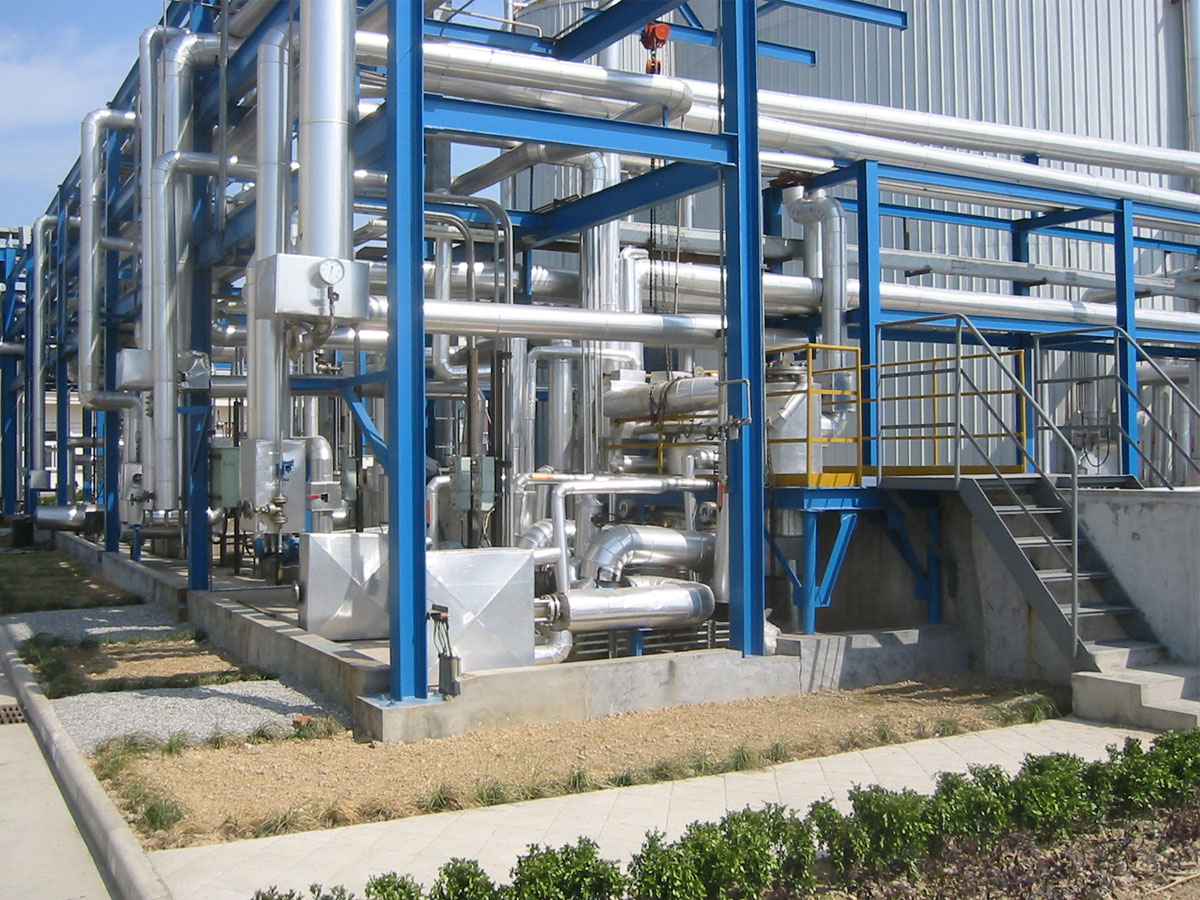
I. Unit Introduction
Air‑cooled Screw Chiller is a large‑to‑medium vapor‑compression refrigeration equipment that adopts twin‑screw compressor as the refrigeration core, forced‑air convection for air‑cooled heat dissipation, and water (or ethylene glycol aqueous solution) as the secondary refrigerant. Commonly known as air‑cooled screw water chiller, it features an integrated monoblock structure and requires no supporting cooling tower.
II. Core Structure and Component Functions
1. Screw Compressor (Heart of the Unit)
(1) Mostly semi‑hermetic twin‑screw male‑female rotor structure with positive‑displacement compression. It delivers stable operation and low vibration, with a far lower failure rate than piston compressors.
(2) Supports four‑stage capacity modulation (100%/75%/50%/25%) or variable‑frequency stepless modulation to accommodate fluctuating loads.
(3) Typical refrigeration capacity ranges: 50 kW ~ 2000 kW, suitable for medium‑to‑large central air‑conditioning and industrial process cooling.
2. Air‑cooled Fin‑and‑tube Condenser (Heat‑rejection End, Core of Air‑cooling System)
(1) Composed of copper‑tube aluminum‑fin heat exchange coils and top‑mounted axial fans. Fans draw forced airflow to remove heat from refrigerant.
(2) Rejects heat directly to ambient atmosphere. No cooling water, cooling tower or cooling water pump is required — this is the major difference from water‑cooled chillers.
3. Evaporator (Chilled‑water Outlet End)
Shell‑and‑tube evaporator is the mainstream type: chilled water flows inside tubes while refrigerant evaporates outside tubes to absorb heat. It supplies low‑temperature chilled water at 5 ℃‑30 ℃. Low‑temperature models can produce ethylene glycol solution down to ‑25 ℃.
4. Throttling Components
Electronic expansion valve / thermostatic expansion valve. It throttles and depressurizes high‑pressure liquid refrigerant and precisely regulates refrigerant flow rate.
5. Electric Control and Protection System
PLC intelligent control. Equipped with multiple safety interlocks including high‑low pressure protection, compressor overload protection, anti‑freeze protection, phase‑loss protection, oil‑temperature protection and water‑flow protection.
III. Complete Refrigeration Operating Principle (Four‑Process Cycle)
It follows the standard vapor‑compression refrigeration cycle:
1.Compression: Low‑temperature low‑pressure refrigerant vapor is compressed by screw rotors and turns into high‑temperature high‑pressure gas at 65‑90 ℃.
2.Air‑cooled Condensation: Hot gas enters the fin‑and‑tube condenser. Fans blow air for heat dissipation, and refrigerant condenses into high‑pressure liquid at ambient temperature.
3.Throttling Expansion: Liquid refrigerant passes through expansion valve for pressure reduction and becomes low‑temperature low‑pressure gas‑liquid mixture.
4.Evaporative Heat Absorption: The mixture flows into evaporator to absorb heat from chilled water and fully vaporizes into low‑temperature gas. It returns to the compressor to repeat the cycle and continuously produce chilled water.
IV. Major Advantages and Disadvantages
✅ Advantages
1.Simple installation: Integrated monoblock unit. On‑site work only includes power connection and chilled‑water piping. It can be installed on rooftops, terraces or outdoor platforms. No dedicated machine room is needed, lowering infrastructure cost.
2.Zero water consumption: No cooling water consumption. Ideal for water‑scarce regions, poor‑water‑quality areas and renovation of old buildings.
3.Easy maintenance: No cooling water piping, water treatment or cooling tower filler replacement work.
4.Reliable operation: Service life of screw compressors reaches 15‑20 years with low vibration and noise. Good energy‑saving performance under partial‑load conditions.
5.Heat‑pump version available: Some air‑cooled screw units are combined cooling‑heating machines, providing cooling in summer and heating in winter for dual‑purpose operation.
❌ Disadvantages
1.Low energy efficiency under high ambient temperature: When ambient temperature exceeds 35 ℃ in summer, air‑cooling heat transfer efficiency drops. Its COP is 10%‑15% lower than water‑cooled screw chillers, leading to higher electricity cost under long‑term full‑load operation
2.Relatively high outdoor noise: Top‑mounted fans keep exhausting air. Noise reduction measures are required for rooftop installation.
3.Occupies outdoor space: Large outer dimension and high ventilation requirement; cannot be placed in enclosed spaces.
4.Anti‑freezing requirement for low‑temperature conditions: For winter long‑term shutdown, water pipelines must be drained or antifreeze added to prevent evaporator cracking by freezing.
V. Core Comparison: Air‑cooled vs Water‑cooled Screw Chiller
| Comparison Item | Air‑cooled Screw Chiller | Water‑cooled Screw Chiller |
|---|
| Heat‑rejection Method | Forced ambient air cooling with built‑in fans | Secondary heat rejection via cooling water + cooling tower |
| Auxiliary Systems | Main unit only; no extra equipment | Main unit + cooling tower + cooling water pump + piping + water treatment |
| Water Consumption | Nearly zero | Continuous makeup‑water consumption, high water usage |
| Installation Location | Rooftops, open well‑ventilated outdoor areas | Main unit inside machine room; cooling tower on rooftop / ground |
| Full‑load Energy Efficiency | COP approx. 3.0‑4.2 | COP approx. 5.0‑6.5, more power‑saving |
| Initial Investment | Higher main‑unit price, less auxiliary material cost | Lower main‑unit price, high cost for supporting works |
VI. Typical Application Scenarios
1. Commercial HVAC Central Air‑conditioning
Cold source for central air‑conditioning in office buildings, shopping malls, hotels, hospitals, gymnasiums, airports and exhibition centers.
2. Industrial Process Cooling (Most Common Use)
Constant‑temperature control for chemical and pharmaceutical reaction kettles
Mold cooling for plastic injection and extruder machines
Bath‑solution cooling for electroplating and anodizing processes
Temperature control for lithium‑battery and new‑energy production lines, vacuum coating equipment
Oil cooling for large‑scale air compressors, generators and hydraulic systems
3. Special Restricted‑condition Sites
Water‑scarce factory zones, mine field projects, temporary production lines, buildings where cooling‑tower retrofitting is impossible.
VII. Key Sizing Parameters (Essential for Procurement)
1.Nominal refrigeration capacity (kW / refrigeration ton)
2.Chilled‑water outlet temperature (7 ℃ for standard models; ethylene glycol required for low‑temperature units)
3.Maximum ambient operating temperature (43 ℃ for standard high‑ambient‑temperature models)
4.Compressor type: fixed‑speed with four‑step capacity modulation / variable‑frequency screw
5.Refrigerant: R134a (standard), R407C, R513A low‑GWP eco‑friendly refrigerants
6.Water flow rate, pump head and anti‑freeze requirements
VIII. Basic Routine Maintenance Guidelines
1.Periodically clean air‑cooled fin‑and‑tube condensers. Dust and catkin clogging will severely degrade energy efficiency.
2.Regularly replace compressor refrigeration oil, oil filter and filter‑drier.
3.Inspect fan bearings, belts and tighten electrical connections.
4.Drain water circuit or add antifreeze to protect evaporator during long‑term winter shutdown.
Precautions for Unit Use
Installation precautions
1. When lifting, positioning, and installing the unit, safety must be taken into account to prevent collisions and ensure the integrity of the equipment.
2.If the unit is installed outdoors, efforts should be made to avoid exposure to wind and rain (except for rainproof types), direct sunlight, or other heat sources that directly radiate; The computer room environment must be kept dry, clean, and ensure good ventilation, leaving space for unit maintenance and upkeep.
3. For air-cooled units, please ensure that there are no obstructions around the unit and reserve 1 meter of space; There is no obstruction within 2 meters of the top of the unit to ensure good ventilation.
4. It is recommended to install the unit on a strong and level ground, and install shock-absorbing rubber pads under the unit chassis to correct the level of the unit. If there are anchor bolts, they must be installed and fixed.
5. The circulating water pump used in conjunction with the unit should be selected and installed according to the data requirements such as water flow rate and water resistance required by the unit.
6. The water pump must be installed in front of the inlet of the unit, and it is recommended to install a filter at the inlet of the water pump to prevent foreign objects from entering the heat exchanger of the unit; If the unit is installed in areas with poor water quality, water treatment must be carried out first to avoid damage to the heat exchanger.
7. It is recommended to install valves, water pressure gauges, thermometers, water flow switches, and other equipment for the water pipeline system connecting the unit, in order to facilitate the inspection and maintenance of the unit's daily operation.
8.To prevent air from being trapped in the water system, the air must be completely discharged before starting the compressor.
9. The chilled water pipeline must be insulated properly to avoid loss of cooling capacity, condensation, and freezing.
10. The weight of the system connection pipeline shall not be borne by the machine body. Rubber shock-absorbing flexible joints and gate valves shall be installed at the inlet and outlet of the unit to avoid vibration and facilitate maintenance.
11.When configuring wires for the unit, wires with slightly larger cross-sections (with margin) should be selected according to the power consumption, and reliable electronic control components and grounding power sources should be installed to prevent accidents such as overload and leakage.
12. As the unit is equipped with reverse phase and phase loss protection, attention must be paid to whether the line phase is correct during wiring installation. The unit cannot operate normally when the phase is misconnected or missing.
13. The operator of the unit must observe the operation status of the unit at all times. Once any abnormal situation is found, please promptly troubleshoot. Forced operation will inevitably cause damage to the unit.
Precautions for operation:
1. Before starting up, check whether all water outlets and pipelines of the unit have been correctly installed and connected.
2. Before starting up, check if the power supply of the unit is connected and if the phase sequence is correct.
3. Before starting up, ensure the safety of the power and water sources. Please carefully refer to the equipment operation manual and strictly follow the instructions for use and operation.
Maintenance precautions:
1. Regularly replace the water in the water tank (it is recommended to replace it every 2 months).
2. Regularly clean the radiator of the unit. For air-cooled units, it is recommended to clean the radiator every 3 months; It is recommended to clean the shell and tube condenser and cooling tower of water-cooled units every 6 months (if the usage environment or water quality is poor, it is recommended to shorten the cleaning cycle).
3.If the unit is not used for a long time, please turn off the main power supply; When the ambient temperature is below 0 ℃ and the unit is shut down for more than 6 hours, the unit and pipelines may freeze, and the damage caused by this is not covered by the warranty.
The best way to avoid pipeline freezing is to completely drain all the water in the unit system!
4. Regularly check the water quality on site to ensure that the water source is qualified (pH ≈ 7). If it contains corrosive substances and causes damage to the unit, it is not covered by the warranty.
5.When the unit encounters unavoidable faults during use, please inform our company of the unit model, component name, and other information so that we can provide you with services more quickly.
6.During the warranty period, our company promises to provide free maintenance services for the unit (excluding human damage, improper use, natural disasters, and uncontrollable factors).
Warning: This unit is a high-voltage, highly specialized mechanical equipment, and should be operated correctly by professional technicians strictly in accordance with the "User and Installation Manual".





 +86 18503011521