1. Unit Introduction
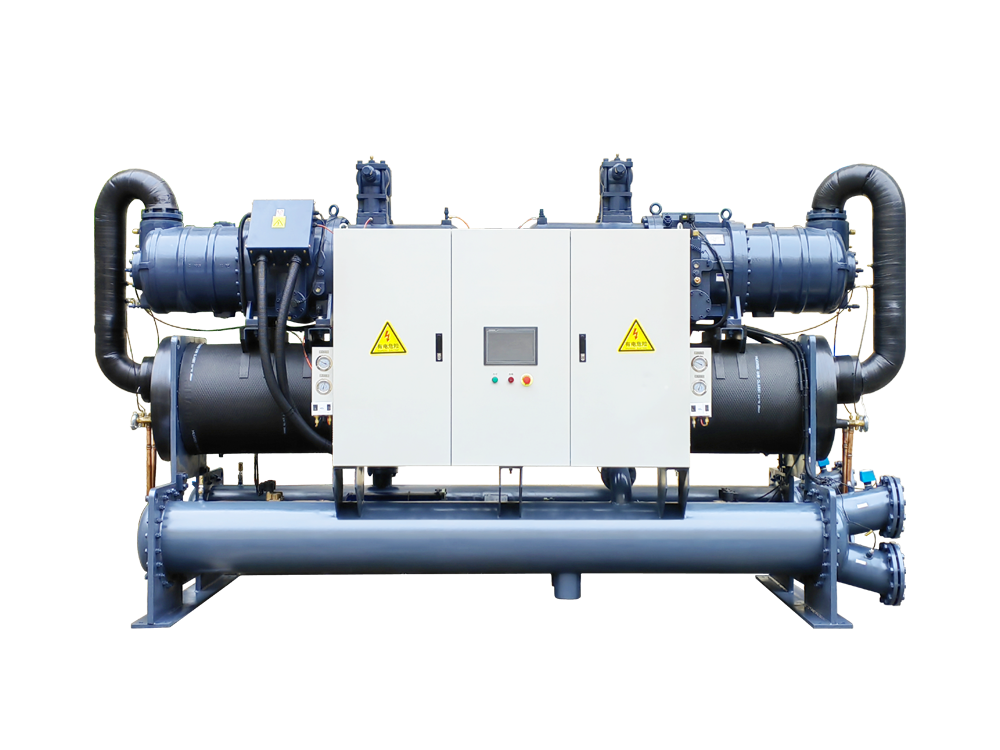
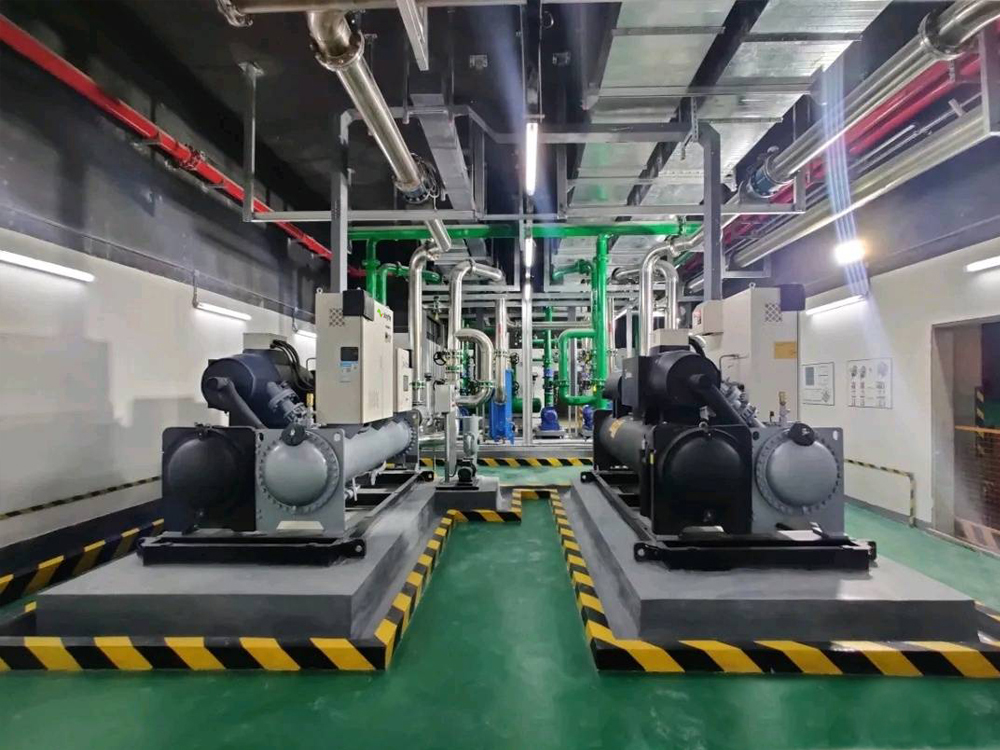
The water‑cooled screw chiller adopts a semi‑hermetic twin‑screw compressor as its core component. It is equipped with a shell‑and‑tube water‑cooled condenser, which removes condensation heat via circulating cooling water from a cooling tower, to produce chilled water at around 7 °C. As a main unit for large‑scale industrial and central air‑conditioning systems, it is generally installed in an indoor refrigeration machine room and serves as the preferred cold source for large‑size projects.
2. Complete System Composition (All components are required)
2.1 Main Unit (Installed inside machine room)
(1) Screw compressor: A positive‑displacement compressor compresses refrigerant through meshing male and female rotors. It operates smoothly and features better liquid‑slugging resistance than piston compressors. It supports four‑step capacity regulation at 25%/50%/75%/100%; variable‑frequency models provide stepless capacity adjustment. R134a is a commonly‑used refrigerant, and this unit is the mainstream choice for large‑capacity chilled‑water systems.
(2) Shell‑and‑tube water‑cooled condenser (core water‑cooled component): High‑temperature and high‑pressure refrigerant flows through the shell side, while cooling water runs through the tube side. Cooling water carries away heat from refrigerant, delivering much higher heat‑exchange efficiency than air‑cooled fin‑type condensers.
(3) Shell‑and‑tube evaporator: Chilled water flows inside tubes, and refrigerant evaporates and absorbs heat on the shell side, supplying low‑temperature chilled water to terminal air‑conditioning or industrial equipment.
(4) Throttling device: electronic expansion valve / thermostatic expansion valve.
(5) Oil separator, oil filter, drier‑filter, PLC control cabinet, and full‑set protection modules (high/low pressure, water flow, freeze protection, overload, phase‑sequence protection, etc.).
2.2 Pumps inside machine room
Chilled‑water pump: Delivers chilled water to air‑conditioning terminals on each floor or production equipment.
Cooling‑water pump: Circulates hot cooling water to the rooftop cooling tower for heat dissipation.
2.3 Outdoor components
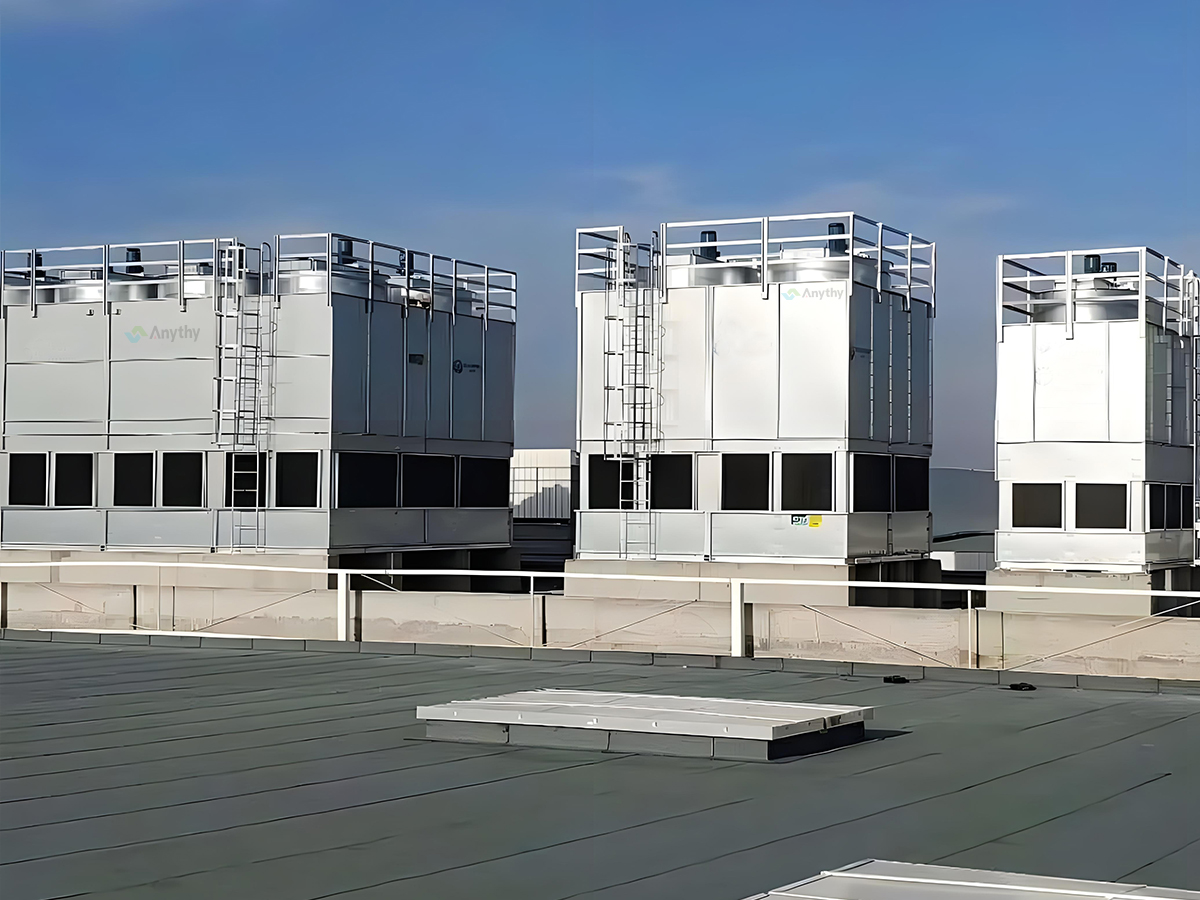
FRP cooling tower: Cooling water is sprayed inside the tower and dissipates heat through evaporation upon contact with ambient air, then flows back to the chiller after temperature reduction.
2.4 Auxiliary accessories
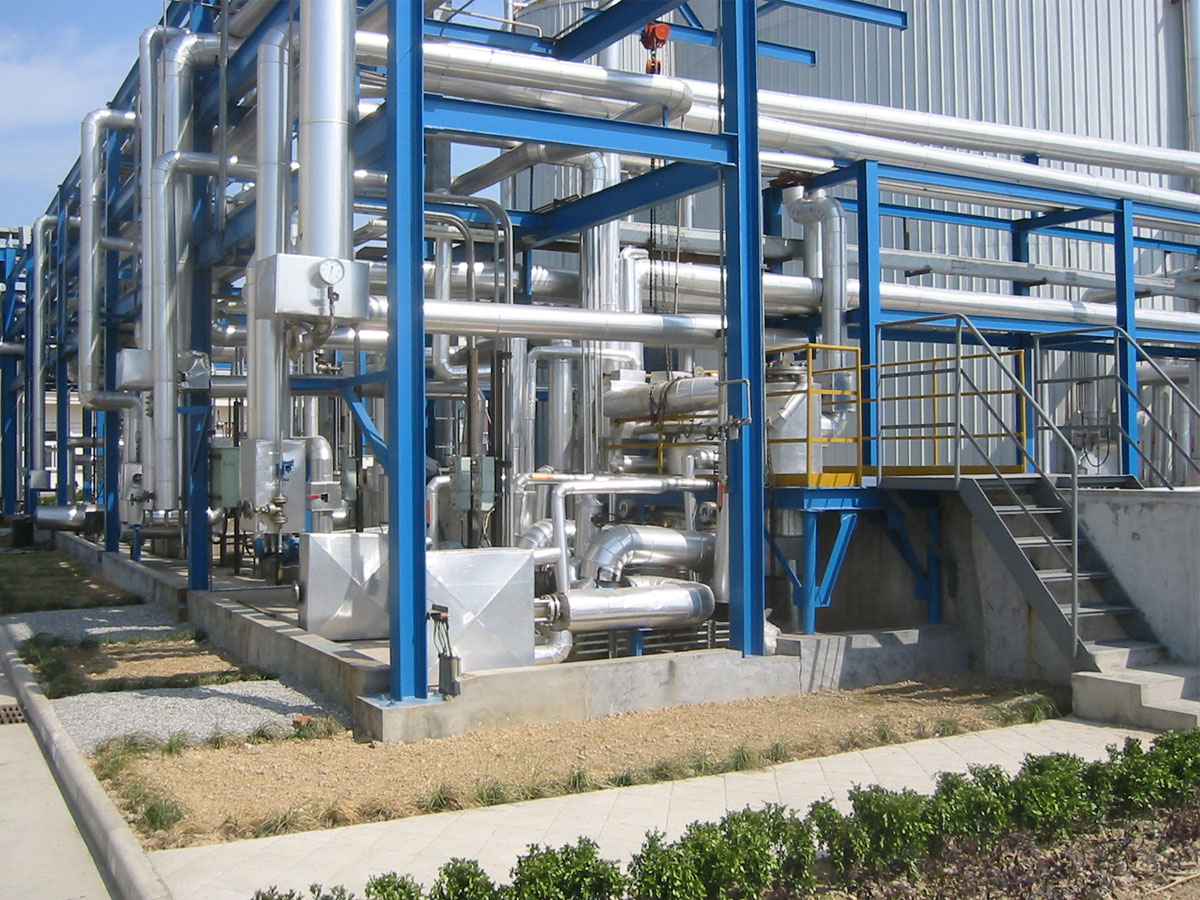
Expansion tank, water‑treatment equipment (electronic water processor / chemical dosing tank), Y‑strainer, valves, flexible joints, vibration dampers, etc.
3. Refrigeration Cycle Principle
Compression: The compressor compresses low‑temperature low‑pressure refrigerant gas into high‑temperature high‑pressure gaseous refrigerant.
Condensation: High‑pressure gaseous refrigerant enters the shell‑and‑tube water‑cooled condenser, where it is cooled by tube‑side cooling water and condensed into high‑pressure liquid refrigerant.
Throttling: Refrigerant passes through the expansion valve for pressure and temperature reduction, turning into low‑temperature gas‑liquid two‑phase mixture.
Evaporation: Refrigerant absorbs heat from chilled water and vaporizes inside the evaporator. Chilled water is cooled down, and refrigerant returns to the compressor to complete the cycle.
4. Advantages and Disadvantages
Advantages
High energy efficiency: Under standard working conditions, COP can reach 5.0~6.8. Long‑term operating power consumption is far lower than air‑cooled screw chillers, delivering superior energy‑saving performance for large buildings.
The main unit is placed indoors. Noise and heat will not affect building facades, facilitating noise reduction and sound‑insulation treatment.
Performance is barely affected by ambient temperature in hot summer, ensuring stable output, which brings prominent advantages in hot southern regions.
Available in very large single‑unit capacity, exceeding 2000 RT, suitable for shopping malls, hospitals, industrial parks and data centers.
Better service life and lower failure rate thanks to favorable indoor machine‑room environment.
Disadvantages
Requires dedicated refrigeration machine room and rooftop cooling tower, leading to high investment in civil works and piping systems.
Continuous tap‑water consumption caused by evaporation and drift loss in cooling towers; not suitable for water‑scarce areas.
Multiple system components including main unit, two sets of water pumps, cooling tower and water‑treatment devices bring numerous control points and increase operation‑maintenance complexity.
Cooling towers and outdoor pipelines must be insulated, filled with antifreeze or fully drained for freeze protection in winter.
5. Compact Comparison: Water‑Cooled Screw vs Air‑Cooled Screw Chiller
| Comparison Item | Water‑Cooled Screw Chiller | Air‑Cooled Screw Chiller |
|---|
| Heat dissipation mode | Cooling water + cooling tower | Air heat dissipation via top‑mounted fans |
| Installation location | Indoor machine room | Outdoor rooftop / ground |
| Footprint | Large, occupied by machine room plus cooling tower | Only space for main unit |
| Power consumption | Low with high efficiency | Relatively high, obvious efficiency drop under high ambient temperature |
| Water consumption | Large makeup‑water demand | Almost zero water consumption |
| Initial cost | Low main‑unit price, high cost for auxiliary works | High main‑unit price, few auxiliary materials |
| Noise level | Noise can be isolated inside machine room | Relatively high outdoor noise exposure |
6. Application Scenarios
6.1 Large‑scale central air‑conditioning systems
Large shopping malls, Grade‑A tertiary hospitals, office building clusters, hotel complexes, exhibition centers, stadiums, university teaching buildings.
6.2 High‑power industrial cooling
Reaction kettles, large‑scale electroplating lines, anodizing production lines;Central chilled‑water systems for injection molding, extrusion and blow‑molding processes;Liquid cooling for data centers, cooling for large air compressors and generator sets;Constant‑temperature chilled‑water systems for pharmaceutical, new‑material and lithium‑battery workshops.
6.3 Other applicable conditions
Projects with sufficient machine‑room space, abundant water resources, long annual operating hours and high sensitivity to operating electricity costs.
7. Key Selection Parameters
Nominal cooling capacity (RT / kW);
Chilled‑water supply‑return temperature: conventional 7 °C /12 °C; low‑temperature glycol‑type units can reach ‑5 °C ~‑20 °C;
Compressor: fixed‑speed capacity regulation / variable‑frequency screw;
Refrigerant: conventional R134a, low‑GWP eco‑friendly refrigerants such as R513A;
Water flow rate, unit pressure rating, pump head, machine‑room power distribution capacity;
Heat‑recovery requirement (recover condensation heat for domestic hot‑water production).
8. Key Routine Maintenance Points
Regular tube‑cleaning for condensers and evaporators (the most critical maintenance for water‑cooled chillers; scale fouling will cause sharp efficiency decline).
Clean cooling‑tower fills, replace water and perform chemical water treatment to prevent scale, algae and legionella bacteria.
Replace refrigeration oil, oil filters and drier‑filters according to operating hours.
Inspect pump bearings, pipeline thermal insulation and electrical systems.
Fully drain water circuits or add industrial antifreeze for freeze protection during winter shutdown.
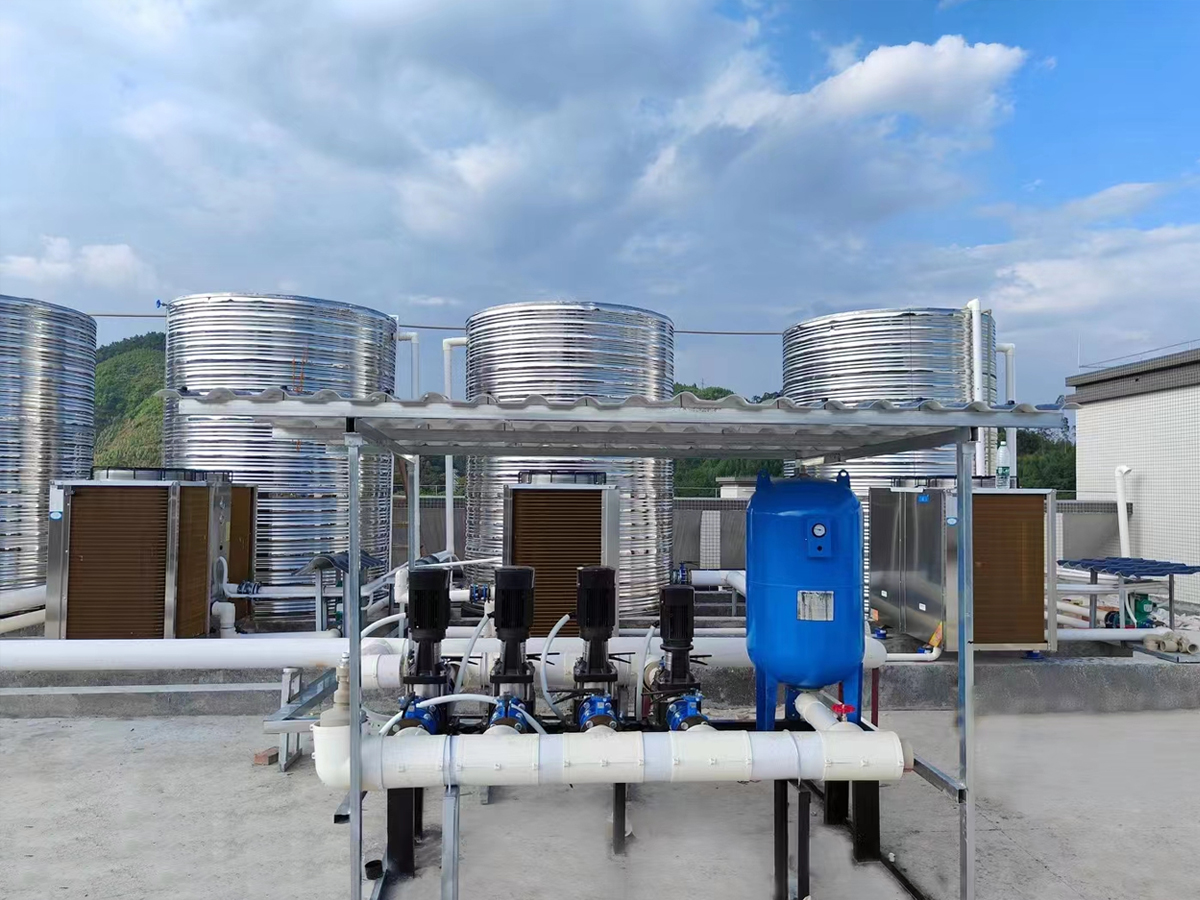
Supplement: Heat‑recovery water‑cooled screw chillerIt can recover heat from the condenser side. While providing cooling in summer, it produces hot water at 45~55 °C for bathing water in hotels, dormitories and swimming pools, delivering remarkable energy‑saving benefits. Widely adopted in hotel projects.
Precautions for Unit Use
Installation precautions
1. When lifting, positioning, and installing the unit, safety must be taken into account to prevent collisions and ensure the integrity of the equipment.
If the unit is installed outdoors, efforts should be made to avoid exposure to wind and rain (except for rainproof types), direct sunlight, or other heat sources that directly radiate; The computer room environment must be kept dry, clean, and ensure good ventilation, leaving space for unit maintenance and upkeep.
3. For air-cooled units, please ensure that there are no obstructions around the unit and reserve 1 meter of space; There is no obstruction within 2 meters of the top of the unit to ensure good ventilation.
4. It is recommended to install the unit on a strong and level ground, and install shock-absorbing rubber pads under the unit chassis to correct the level of the unit. If there are anchor bolts, they must be installed and fixed.
5. The circulating water pump used in conjunction with the unit should be selected and installed according to the data requirements such as water flow rate and water resistance required by the unit.
6. The water pump must be installed in front of the inlet of the unit, and it is recommended to install a filter at the inlet of the water pump to prevent foreign objects from entering the heat exchanger of the unit; If the unit is installed in areas with poor water quality, water treatment must be carried out first to avoid damage to the heat exchanger.
7. It is recommended to install valves, water pressure gauges, thermometers, water flow switches, and other equipment for the water pipeline system connecting the unit, in order to facilitate the inspection and maintenance of the unit's daily operation.
To prevent air from being trapped in the water system, the air must be completely discharged before starting the compressor.
9. The chilled water pipeline must be insulated properly to avoid loss of cooling capacity, condensation, and freezing.
10. The weight of the system connection pipeline shall not be borne by the machine body. Rubber shock-absorbing flexible joints and gate valves shall be installed at the inlet and outlet of the unit to avoid vibration and facilitate maintenance.
When configuring wires for the unit, wires with slightly larger cross-sections (with margin) should be selected according to the power consumption, and reliable electronic control components and grounding power sources should be installed to prevent accidents such as overload and leakage.
12. As the unit is equipped with reverse phase and phase loss protection, attention must be paid to whether the line phase is correct during wiring installation. The unit cannot operate normally when the phase is misconnected or missing.
13. The operator of the unit must observe the operation status of the unit at all times. Once any abnormal situation is found, please promptly troubleshoot. Forced operation will inevitably cause damage to the unit.
Precautions for operation:
1. Before starting up, check whether all water outlets and pipelines of the unit have been correctly installed and connected.
2. Before starting up, check if the power supply of the unit is connected and if the phase sequence is correct.
3. Before starting up, ensure the safety of the power and water sources. Please carefully refer to the equipment operation manual and strictly follow the instructions for use and operation.
Maintenance precautions:
1. Regularly replace the water in the water tank (it is recommended to replace it every 2 months).
2. Regularly clean the radiator of the unit. For air-cooled units, it is recommended to clean the radiator every 3 months; It is recommended to clean the shell and tube condenser and cooling tower of water-cooled units every 6 months (if the usage environment or water quality is poor, it is recommended to shorten the cleaning cycle).
If the unit is not used for a long time, please turn off the main power supply; When the ambient temperature is below 0 ℃ and the unit is shut down for more than 6 hours, the unit and pipelines may freeze, and the damage caused by this is not covered by the warranty.
The best way to avoid pipeline freezing is to completely drain all the water in the unit system!
4. Regularly check the water quality on site to ensure that the water source is qualified (pH ≈ 7). If it contains corrosive substances and causes damage to the unit, it is not covered by the warranty.
When the unit encounters unavoidable faults during use, please inform our company of the unit model, component name, and other information so that we can provide you with services more quickly.
During the warranty period, our company promises to provide free maintenance services for the unit (excluding human damage, improper use, natural disasters, and uncontrollable factors).
Warning: This unit is a high-voltage, highly specialized mechanical equipment, and should be operated correctly by professional technicians strictly in accordance with the "User and Installation Manual".





 +86 18503011521